
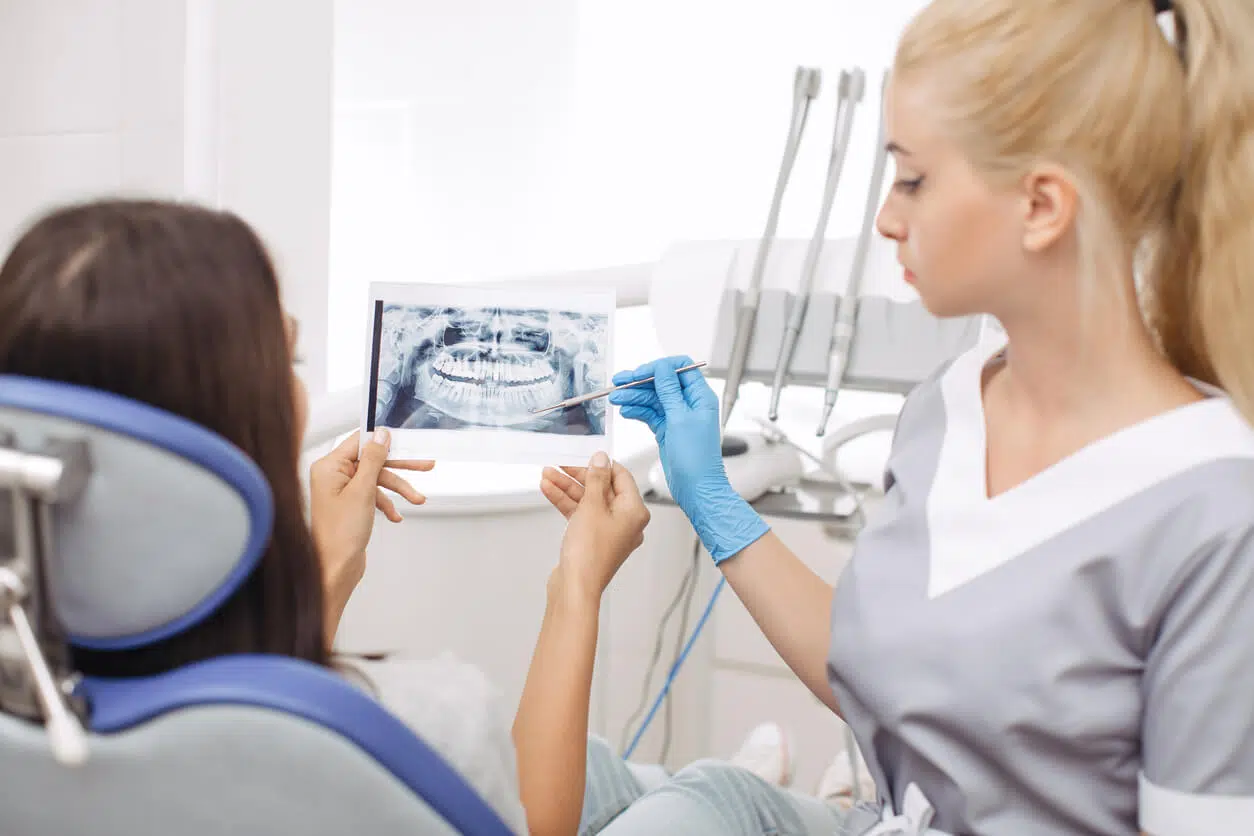
Did you know that molars are among the most frequently lost teeth, yet they play an important role in maintaining our dental health and overall well-being? Molars contribute significantly to our dental structure. They are the heavy lifters in our mouths, responsible for grinding and chewing food. But what happens when you lose one of these important teeth?
While it might initially seem like a minor issue, a missing molar can have various consequences. We’ll explore why it’s important to address a missing molar and discuss your treatment options for replacement.
Replacement Options For Missing Molar Teeth
Dental Implants
This is a long-lasting option where a metal post, typically made of titanium, is surgically placed in the jawbone to act as an artificial tooth root. Over time, the jawbone fuses with the metal post through a process called osseointegration. It provides a stable base for a replacement tooth. This procedure not only restores functionality but also helps to maintain the structure and integrity of the jawbone.
Dental Bridges
Dental bridges are a popular option to replace them. Various types include traditional, cantilever, and Maryland bridges, each using different methods to anchor the replacement tooth to adjacent teeth. The procedure involves preparing the nearby teeth, taking impressions, and crafting the bridge from materials like porcelain or metal. Dental bridges can be installed relatively quickly and are less invasive compared to dental implants, but they may require more ongoing maintenance.
Partial Dentures
Removable appliances designed to fit snugly into the gap left by the missing molar and partial dentures offer a cost-effective and non-invasive option for dental restoration. These appliances help restore functionality and aesthetics, allowing individuals to chew and speak more comfortably. However, they require diligent maintenance, such as regular cleaning and proper storage, to ensure their longevity and prevent potential oral health issues.
Resin-Retained Bridges
A less common but viable option, these bridges use a metal or ceramic framework bonded to the back of adjacent teeth. This method makes the procedure minimally invasive, as it doesn’t require significant alteration of the surrounding teeth. Despite being less commonly chosen, this type of bridge still provides a successful replacement. It offers both stability and a natural appearance.
Composite Bonding
Although typically used for smaller gaps, composite bonding can help fill the space left by a missing molar. This procedure involves applying a natural-colored composite resin to the adjacent teeth, creating a seamless look. It offers a quick and affordable temporary replacement solution. However, it’s generally considered less durable than other options and may need more frequent touch-ups.
Tooth-Supported Fixed Bridge
Similar to a traditional bridge, a tooth-supported fixed bridge uses crowns on neighboring teeth to support the artificial tooth. This type of bridge does not use metal wings like a resin-retained bridge but relies on the adjacent teeth for stability. This option is commonly used when implants are not feasible, although it requires good health of the neighboring teeth.
Factors to Consider When Choosing a Replacement Option
- Bone Quality and Quantity. Dental implants require sufficient bone mass and density. If the jawbone has degenerated owing to extended tooth loss, it may not be able to support an implant without further operations like bone grafting
- Cost and Budget. Different tooth replacement options have varying costs. Dental implants are more expensive than bridges or partial dentures. To stay within your budget, consider a breakdown of costs, including potential additional surgery or treatments.
- Long-Term Durability. Some options, like dental implants, offer long-lasting and durable solutions that can last a lifetime with proper care. In contrast, removable dentures and bridges may need replacement or adjustment over the years.
- Aesthetic Considerations. The replacement tooth must look natural, especially in areas of the mouth that are visible. For a more visually acceptable outcome, dental crowns used in implants and bridges can be made to match the natural hue.
- Functionality and Comfort. The replacement option ought to bring back the lost tooth’s normal functions, such as speaking and chewing effectively. Another crucial factor is comfort; some patients may find that implants or fixed bridges are more pleasant than removable partial dentures.
- Maintenance and Care. Consider the maintenance requirements of each option. Dental implants typically require standard oral hygiene practices, while removable dentures need daily cleaning and might need periodic adjustments.
Is It OK to Have a Missing Molar?
Having a missing molar can lead to several oral health issues if left untreated. The absence of a molar can cause adjacent teeth to shift, potentially resulting in misaligned teeth and bite alignment issues. Additionally, the lack of stimulation from the missing tooth can lead to bone loss in the jaw, affecting facial appearance over time.
On the other hand, gaps left by the lost molar can also harbor food particles, increasing the risk of decay and gum disease. To maintain oral health and function, it’s essential to consult with a dentist to explore replacement options like dental implants, dental bridges, or partial dentures.
Consequences of a Missing Molar Tooth
Bone Loss
One of the most significant consequences of a missing molar is bone loss in the jaw. The jawbone requires stimulation from the natural tooth roots or an artificial tooth root (as in the case of dental implants) to maintain its density and structure. When a molar is missing, the lack of stimulation leads to bone resorption, gradually causing the bone tissue to deteriorate.
Facial Appearance Changes
Missing a molar can affect facial appearance over time. The loss of bone mass in the jaw due to bone resorption can lead to changes in facial structure, causing the cheeks to appear sunken and the skin around the mouth to wrinkle. These changes can make a person look older than their actual age.
Misaligned Teeth
Missing molars can lead to misalignment of the remaining teeth. Adjacent ones may shift or tilt into the gap left by the missing molar, while molars in the opposite jaw can over-erupt. This movement can disrupt overall alignment, potentially causing bite issues and affecting oral functions.
Oral Health Issues
Gaps left by missing molars can trap food particles and bacteria, leading to tooth decay, gum disease, and bad breath. This can worsen overall oral health and will increase stress on the remaining teeth; the others may experience more wear and tear as they compensate for the lost tooth’s function. This can result in premature breakdown or damage. Also, they can alter bite alignment, causing stress on the temporomandibular joints (TMJ) that can lead to TMJ disorders.
Chewing and Speech Problems
Molars play an important role in grinding and chewing food, and their absence can greatly reduce chewing efficiency, leading to digestive issues as food is not adequately processed before swallowing. Additionally, missing molars can affect the articulation of certain sounds in speech, causing difficulties in pronouncing specific words clearly. This can impact self-confidence and communication, and the instability in adjacent teeth due to the gap can exacerbate these problems further.
Restore Your Smile Today at Willowgreen Dental: Book an Appointment Now!
Lost molar can have far-reaching impacts on both oral and overall health. There are several possible tooth replacement options available, such as dental implants, dental bridges, and partial dentures, each with its own set of benefits and considerations. Addressing a missing molar promptly can restore functionality, improve aesthetics, and maintain your oral health.
Don’t let a missing molar compromise your dental health and quality of life. At Willwgreen Dental, our expert team is committed to helping you find the best replacement option tailored to your needs. Schedule a consultation today to explore the possibilities of a healthier, more confident smile.