
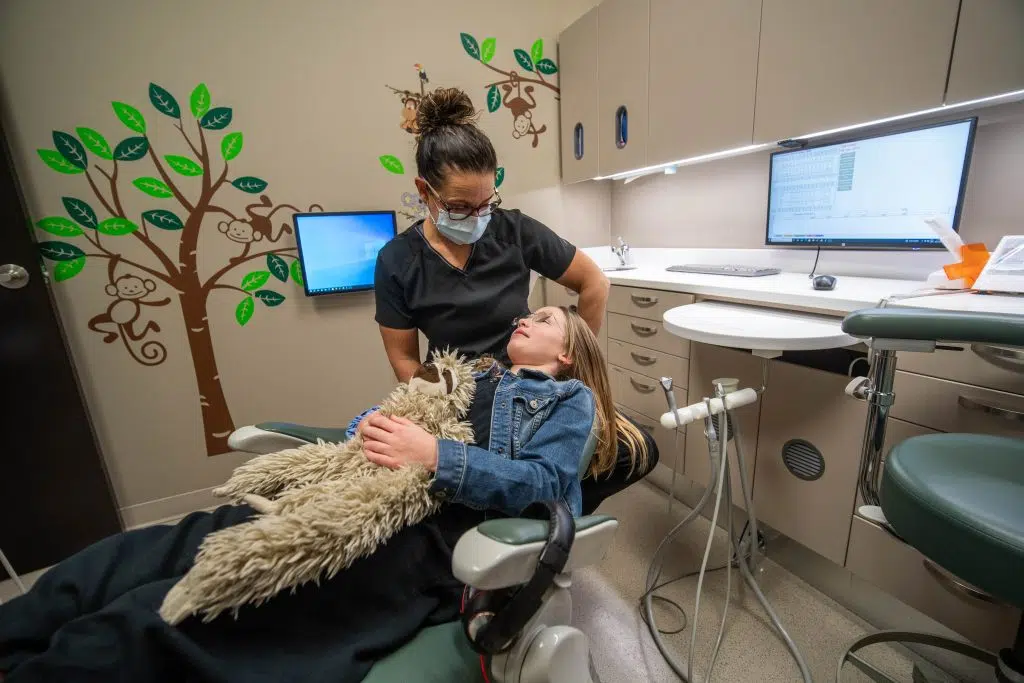
Children’s Dentistry in Saskatoon
Regular dental care gives children and caregivers a chance to ask questions, monitor developing teeth and address oral-health concerns as they arise—from an infant’s first assessment through the school years and adolescence.
Dental care through each stage of childhood
Dental visits can help caregivers understand what is happening now and what to watch as primary teeth emerge, permanent teeth replace them and the bite develops.
Start a dental home
The Canadian Dental Association recommends an infant assessment within six months of the first tooth appearing or by 12 months. Visits may review feeding, cleaning, fluoride exposure and development.
Protect developing teeth
As permanent teeth erupt, visits may include exams, cleaning, fluoride recommendations, selective sealants and monitoring of tooth position and bite development.
Build independent habits
Adolescents may need support with orthodontic appliances, cavity prevention, diet, mouthguards, wisdom-tooth development and taking responsibility for home care.
Children’s dental services at Willowgreen Dental
The following services may be considered after an assessment. Not every service is needed at every age or visit.
Dental exams and cleanings
Exams assess the teeth, gums, bite and oral tissues. Cleanings remove plaque and hardened deposits; X-rays are recommended based on diagnostic need.
Explore dental cleaning →Fluoride treatment
Professional fluoride may be considered according to the child’s age, cavity risk, home-care products and other fluoride sources.
Explore fluoride treatment →Dental sealants
Thin protective materials may be placed in selected pits and grooves. Sealants do not replace brushing, flossing, fluoride or exams.
Explore dental sealants →Cavity and damaged-tooth care
Primary teeth support chewing, speech and space for permanent teeth. Monitoring, a filling, another treatment or referral may be discussed.
Ask about an assessment →Space maintainers
When a primary tooth is lost early, a space maintainer may be considered in selected situations and reviewed as the mouth develops.
Explore space maintainers →Mouthguards and urgent care
Mouthguards may help protect teeth during sport. Pain, swelling, broken or displaced teeth and other urgent concerns need prompt guidance.
Explore mouthguards →For a broken tooth, swelling, significant pain or another urgent concern, review the clinic’s emergency dentistry contact pathway. Life-threatening symptoms require emergency medical care.
Your child’s first dental visit
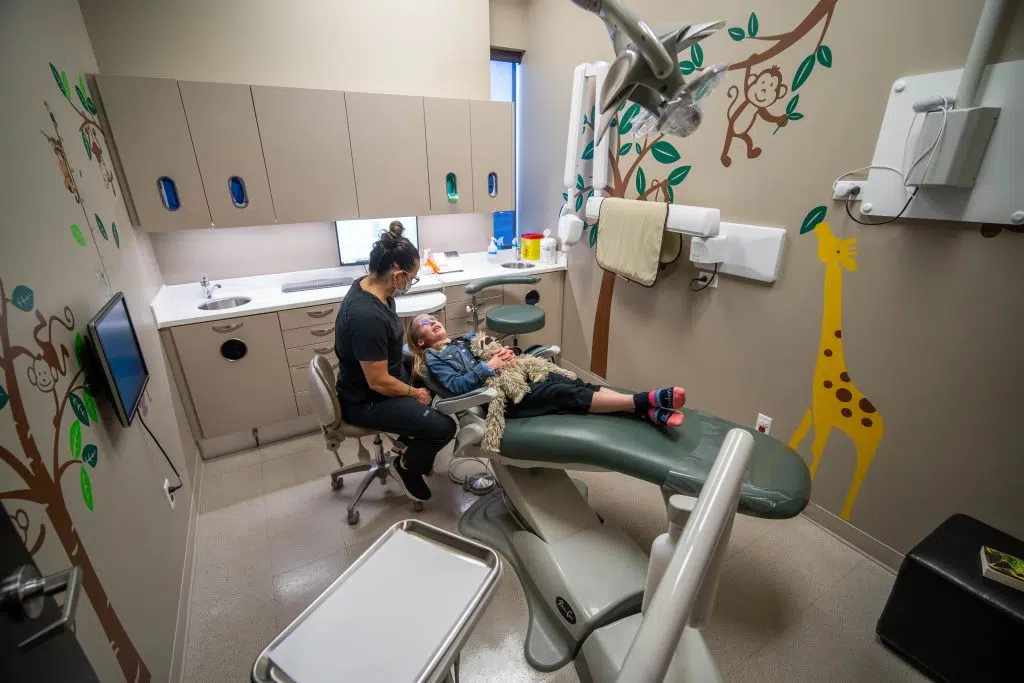
The first appointment is a chance to meet the dental team, review health and dental history, and assess the child’s mouth as participation allows.
- Discuss brushing, toothpaste, feeding and snacking
- Examine teeth, gums, bite and oral development
- Review cavity risk and prevention
- Consider cleaning or preventive care when appropriate
- Discuss fluoride, habits, injury prevention or teething
- Plan future visits or treatment if needed
Some young children open their mouths right away; others need more time. The team may adapt the visit or complete only what can be done appropriately that day.
Read the first-visit preparation guideHelping children take part in their appointment
Children react differently to unfamiliar people, sounds and sensations. The visit can be adjusted according to the child’s needs and what can be completed appropriately that day.
Before the visit
- Use simple, neutral language
- Avoid predicting pain or promising no discomfort
- Share previous dental experiences
- Tell the team about sensory or communication needs
- Provide relevant health information
- Let the office know about specific worries
During the visit
- Steps can be explained in age-appropriate terms
- The team assesses what the child can manage
- Treatment may be divided across appointments
- A plan may be changed or deferred when appropriate
- Referral can be discussed if care cannot be provided safely
- Questions from children and caregivers are welcome
What to expect at ongoing visits
Ongoing appointments begin with an updated health history and a discussion of changes or concerns. The examination and any recommended records help the dentist assess current needs.
Review
Discuss health changes, symptoms, home care and concerns.
Assess
Examine the mouth and take diagnostic records only when indicated.
Explain
Review findings, available options, benefits, material risks and costs.
Plan
Agree on preventive care, monitoring, treatment, follow-up or referral.
Referrals, limitations and parental consent
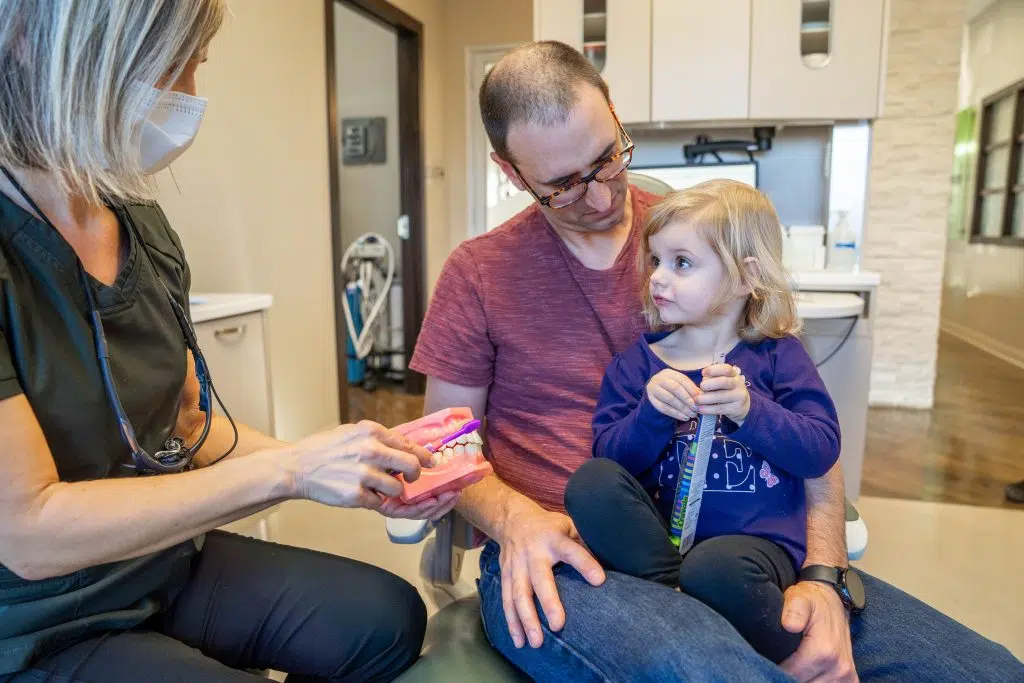
General dentists can provide many routine and restorative services for children. Some situations require specialist assessment or a different setting.
When referral may be recommended
Referral to a pediatric dentist, orthodontist, oral and maxillofacial surgeon, medical professional or another provider may be considered for complex treatment, significant medical conditions, care needs requiring a different setting, developing-bite concerns or needs outside the treating provider’s scope.
A referral matches the child with the level and setting of care their situation requires. It does not mean a caregiver has done anything wrong.
Important limitations
- X-rays are based on diagnostic need, not a fixed age schedule
- Fluoride and sealants do not replace home care
- Restorations and appliances can require follow-up
- Space maintainers need monitoring
- Delaying care can allow some conditions to change
- Treatment may be paused or referred if it cannot be completed safely
Cost, insurance and dental benefits
Costs vary with the examination, diagnostic records, preventive services, number of teeth involved, materials, complexity and whether referral is needed.
Private plans and public programs have different eligibility, frequency and coverage rules. Ask for a current estimate and confirm coverage directly with the plan. An estimate does not guarantee payment.
Developing bites and oral habits
Visits provide an opportunity to monitor crowding, tooth eruption and how the upper and lower teeth meet. If specialist assessment is needed, referral may be recommended.
When relevant, concerns involving oral habits or oral-muscle function may lead to discussion of orofacial myofunctional therapy after appropriate assessment.
Children’s dental care at Willowgreen Dental
At an appointment, the team can review your child’s history, assess current concerns and explain which services may be appropriate. The setting, visit length and proposed care are considered in relation to the individual child.
- Age-appropriate communication
- Preventive and restorative options
- Clear caregiver explanations
- Referral when another setting is appropriate

Children’s dentistry FAQs
These answers provide general information. The right next step depends on the child and the situation.
When should my child first see a dentist?
The Canadian Dental Association recommends an infant assessment within six months after the first tooth erupts or by 12 months. Pain, swelling, injury or another concern should be assessed based on the situation rather than waiting.
What happens at a child’s first dental visit?
The visit may include a health-history review, an examination as the child can participate, cavity-risk assessment and guidance for home care, diet and fluoride.
Why treat a cavity in a baby tooth?
Primary teeth support chewing, speech and space for permanent teeth. Untreated decay can progress and may cause pain or infection. An assessment determines the appropriate option.
Does every child need dental X-rays?
No. X-rays are recommended when they are expected to provide information needed for diagnosis or treatment planning. Type and timing depend on individual clinical factors.
Does every child need fluoride treatment or sealants?
No. These preventive options are considered according to age, teeth, fluoride exposure and cavity risk.
What if my child is nervous about dental visits?
Tell the practice when booking and share communication, sensory or previous-care information that may help. The team can assess how to approach the visit and whether care can be provided in that setting.
What should I do if my child chips or knocks out a tooth?
Contact a dental professional promptly. Do not reinsert a knocked-out primary tooth. A knocked-out permanent tooth is time-sensitive. Serious head or facial injury, breathing difficulty or uncontrolled bleeding requires emergency medical care.
Is Willowgreen Dental a pediatric specialist practice?
Children’s dental services are described as care provided by general dentists, not as pediatric specialists. Referral may be recommended when specialist assessment or another setting is appropriate.
Request a children’s dental appointment in Saskatoon
The Willowgreen team can confirm whether the practice is an appropriate setting for your child’s age and needs and explain what information to bring.
This page provides general information and does not replace an examination, diagnosis, informed-consent discussion or personalized treatment plan.