
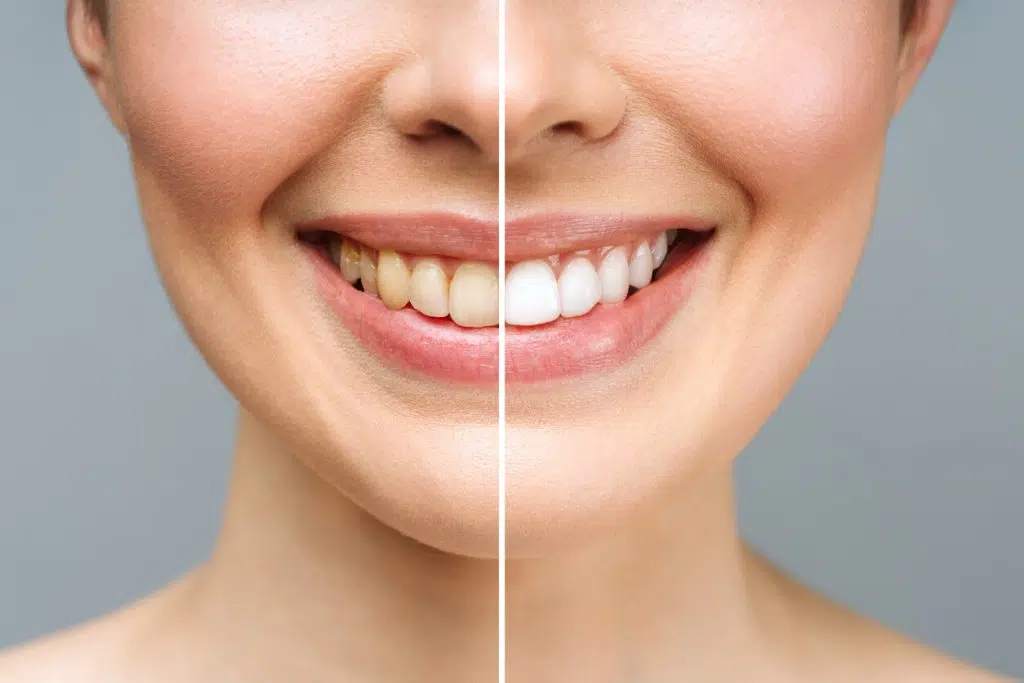
Teeth Whitening in Saskatoon
Professional whitening may lighten eligible natural teeth affected by certain stains or age-related darkening. An assessment helps determine the cause of discolouration, whether whitening may work for you and whether oral-health concerns should be addressed first.
What is professional teeth whitening?
Professional whitening, also called vital tooth bleaching, uses a peroxide-based gel to change the colour of living natural teeth. A dentist-supervised take-home system places a prescribed amount of gel in trays made to fit over your teeth. The trays hold the whitening material in position for the time recommended by your dental team.
Whitening is not a substitute for a professional dental cleaning. Depending on why a tooth looks darker, one service, both services or another treatment may be considered.
Surface stains and changes within the tooth
Food, beverages, tobacco, age, medication history, trauma, previous root canal treatment and changes in enamel or dentin can affect tooth colour. A single dark tooth may require a different assessment from teeth that have gradually changed colour together.
Who may be a candidate for teeth whitening?
Dentist-supervised whitening may be considered by adults with healthy teeth and gums who want to lighten certain stains or age-related discolouration. Candidacy depends on the cause of the colour change, the condition of the teeth, existing restorations and your oral and medical history.
An assessment is especially important if you have:
- Tooth decay or gum inflammation
- Ongoing sensitivity or exposed roots
- A tooth darkened after injury or root canal treatment
- Visible crowns, veneers, fillings or bonding
- White, brown or uneven patches
- Current or recent dental treatment
- Questions about pregnancy or a health condition
- Uncertainty about the cause of discolouration
Potential advantages of dentist-supervised whitening
The amount and evenness of colour change vary. Whitening is not permanent, and no particular shade can be promised.
Assessment before treatment
The teeth, gums and visible restorations are examined before a plan is selected.
Custom-fitted trays
Trays are made to fit your teeth for the prescribed take-home system.
Individual instructions
The team explains how much gel to use and how long to wear the trays.
Support for sensitivity
You can contact the dental team if sensitivity or soft-tissue irritation develops.
Conservative option
Whitening does not require removing natural tooth structure.
Treatment coordination
Whitening can be planned around visible restorations and other cosmetic care.
What to expect with take-home teeth whitening
Your exact schedule depends on the product, concentration, starting shade, response and any sensitivity.
Dental assessment
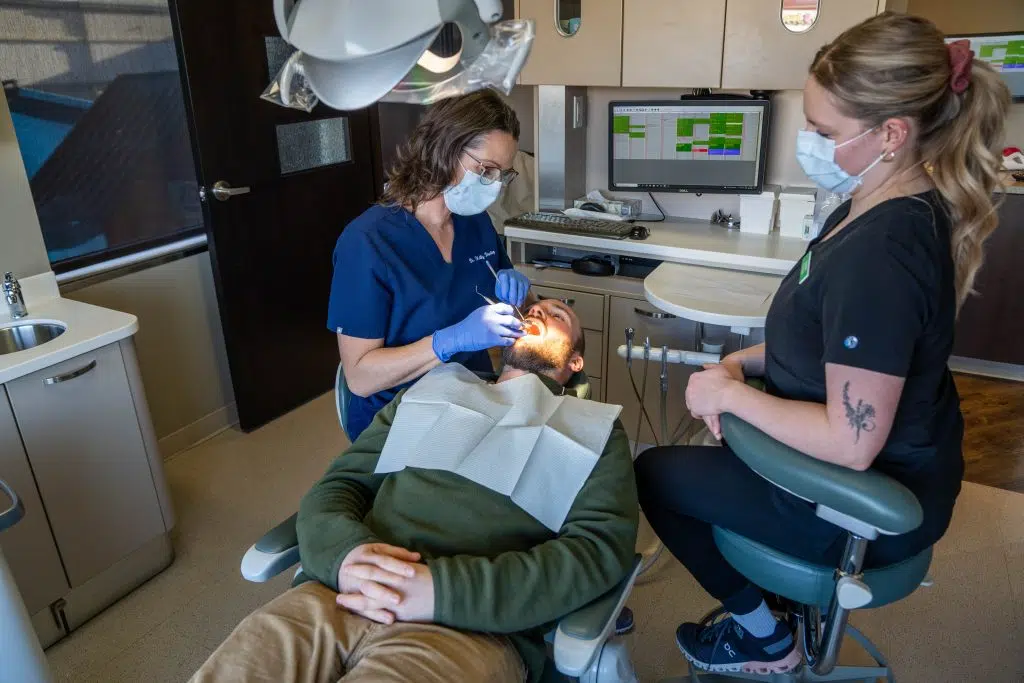
Your dentist reviews your concerns and examines your teeth, gums and visible restorations. Active dental concerns may need attention first.
Treatment planning and custom trays
Impressions or scans may be used to make fitted trays. You receive instructions for gel placement, tray cleaning and wear.
Whitening at home
Wear the trays according to your instructions. Using more gel or extending wear time does not guarantee a better result and may increase irritation.
Follow-up and maintenance
The team may review colour response and sensitivity. Any future touch-up should follow professional advice rather than a fixed schedule.
Teeth whitening options and alternatives
These services are not interchangeable. An assessment helps identify which approach may reasonably address your concern.
| Option | What it may address | Important consideration |
|---|---|---|
| Professional cleaning | Plaque, tartar and some surface deposits | Does not bleach internal tooth colour |
| Dentist-supervised whitening | Certain stains or generalized darkening of natural teeth | Requires assessment and at-home use as directed |
| Retail whitening products | Some surface stains or colour changes | No individualized dental assessment |
| Dental bonding | Selected shape, surface or colour concerns | Bonding material does not whiten |
| Dental veneers | Selected concerns that may not respond to bleaching | Involves restorative treatment |
| Single-tooth treatment | Discolouration related to trauma or root canal treatment | Requires diagnosis; tray whitening may not be appropriate |
Review broader options through cosmetic dentistry, dental bonding and dental veneers.
Risks, limitations and cost considerations
Your dental team can explain which considerations apply to your teeth and proposed treatment.
Risks and limitations
- Temporary tooth sensitivity
- Irritation of gums or other soft tissues
- No colour change to restorations
- Less predictable response for some stains
- Uneven colour change between teeth
- Results that fade over time
- More irritation if products are overused
- No treatment of decay or gum disease
Cost and dental benefits
Cost can vary with the whitening system, records or trays required and whether another dental concern needs care first.
Whitening is commonly considered cosmetic, and dental plans may exclude it. Ask the clinic for a current estimate and confirm benefits directly with your insurer. An estimate is not a guarantee of reimbursement.
Teeth whitening at Willowgreen Dental
An assessment can help you understand what may be contributing to your tooth colour, whether your teeth and gums are ready for whitening, and how visible fillings, crowns, veneers or bonding could affect the result.
- Review the cause of discolouration
- Assess teeth, gums and restorations
- Discuss options and limitations
- Receive take-home instructions

Teeth whitening FAQs
These answers provide general information. An examination is needed for advice about your teeth.
Does whitening work on crowns, veneers or fillings?
No. Bleaching changes the colour of eligible natural teeth but does not lighten restorative materials. A dentist can assess the likely colour match before treatment.
Is teeth whitening the same as a dental cleaning?
No. Cleaning removes plaque, tartar and some external deposits. Whitening uses a bleaching agent to change the colour of natural teeth.
Can teeth whitening cause sensitivity?
Temporary sensitivity and soft-tissue irritation can occur. Follow your instructions and contact the dental team if symptoms are persistent or concerning.
How long does take-home whitening take?
There is no single schedule for every patient. The product, starting shade, response and sensitivity influence the plan your dental team provides.
How long will the colour change last?
Whitening is not permanent. Diet, tobacco use, oral hygiene, the original cause of staining and other factors affect how colour changes over time.
Can I whiten one dark tooth?
A single dark tooth should be assessed first. Trauma, previous root canal treatment or another condition may be involved, and a different technique may be considered.
Should I whiten before bonding, veneers or a crown?
Sometimes whitening is planned before a visible restoration so it can be matched to the post-whitening shade. Discuss the sequence and timing with your dentist first.
Ask about teeth whitening in Saskatoon
The Willowgreen Dental team can examine your teeth, explain the available options and discuss whether dentist-supervised whitening may be appropriate for you.
This page provides general information and does not replace an examination, diagnosis, informed-consent discussion or personalized treatment plan.