
Dental Implants in Saskatoon
Dental implants are one option for replacing missing teeth. An assessment can help you understand whether an implant, bridge or removable option may suit your oral health and priorities.
What is a dental implant?
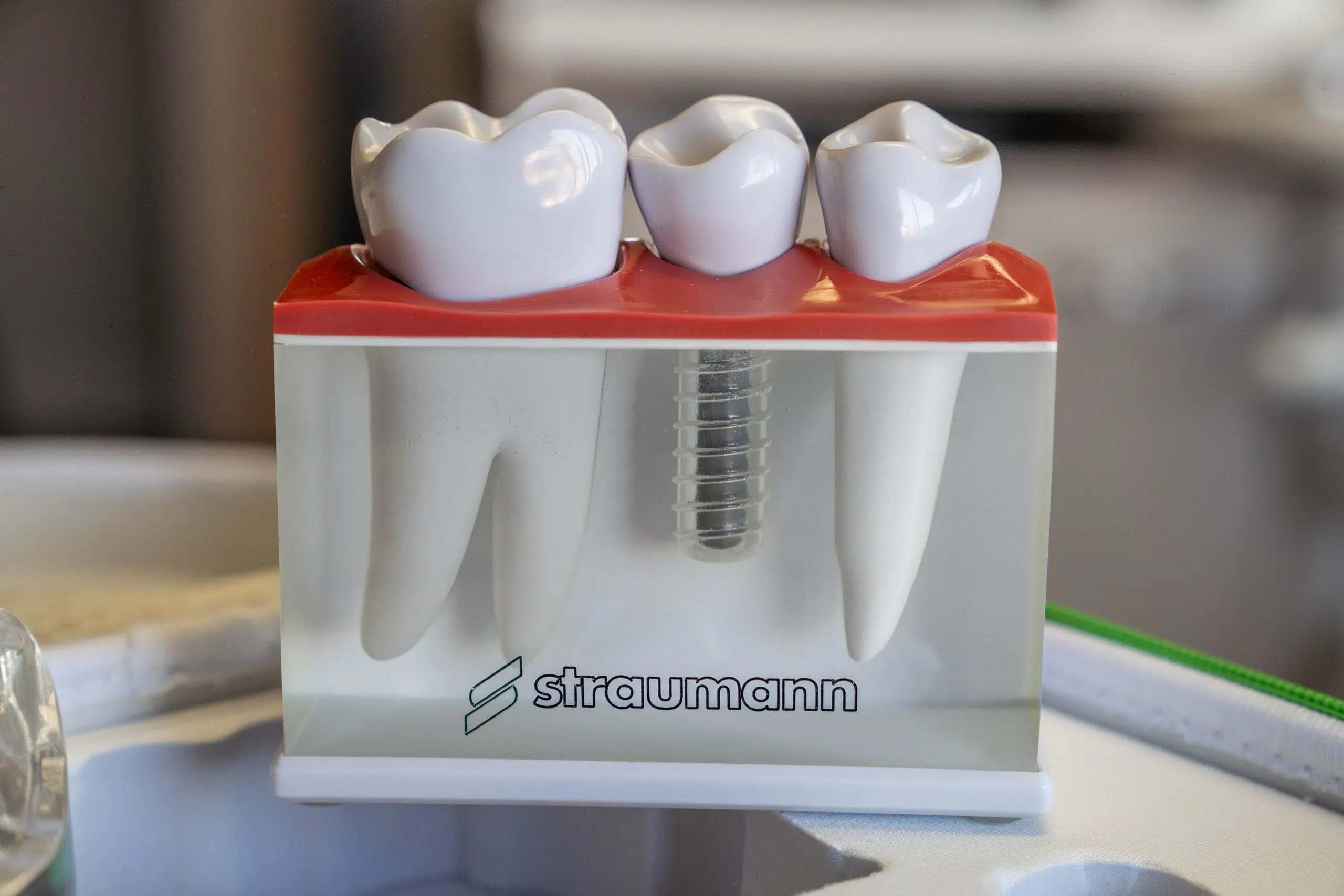
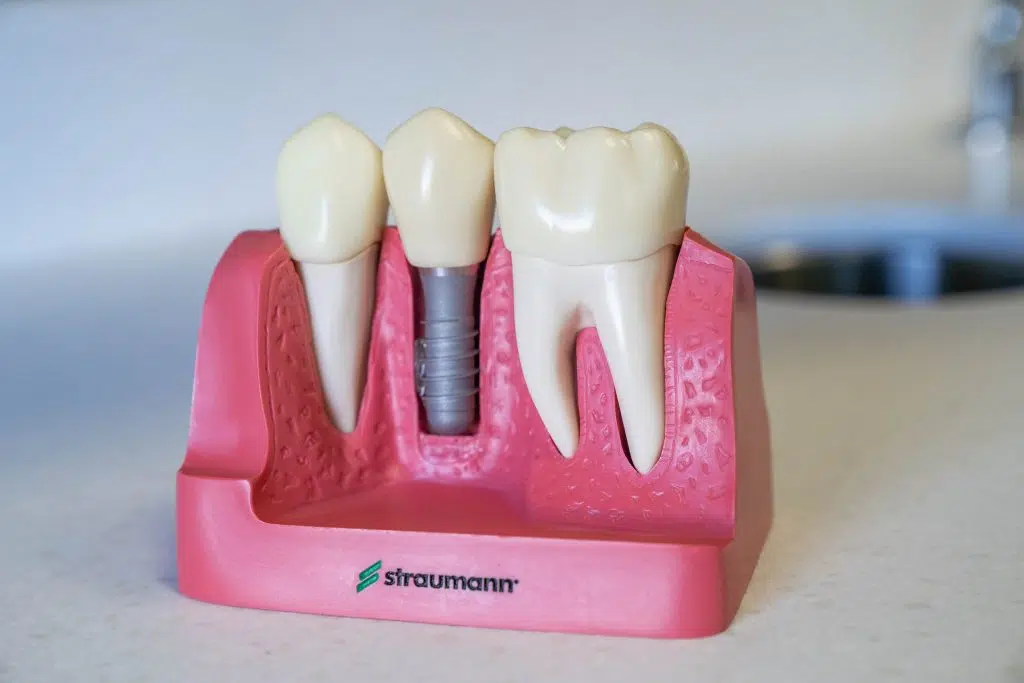
A dental implant is a small post placed in the jawbone to act as an artificial tooth root. After the area heals, an abutment connects the implant to a visible restoration. That restoration may be a crown for one missing tooth, a bridge for several missing teeth or part of an implant-supported denture.
For a more detailed explanation, read what dental implants are and how their components work.
Who may be a candidate for dental implants?
Dental implants may be considered when one tooth, several teeth or all teeth are missing. Suitability depends on more than the size of the gap. Your dentist must assess your mouth and review factors that can affect treatment and healing.
- Health of your gums and remaining teeth
- Amount and condition of bone at the implant site
- Your bite and the position of nearby teeth
- Medical history and medications
- Smoking or vaping
- Conditions that may affect healing
- Ability to clean around the implant
- Ability to attend follow-up visits
Potential benefits of dental implants
For appropriately selected patients, implant treatment may provide several advantages. Benefits vary by person, and implants still require daily cleaning and regular dental examinations.
Stable tooth replacement
An implant-supported restoration is anchored rather than held in place by removable adhesive.
Support for chewing
Replacing a missing tooth can help restore function in that area.
Neighbouring teeth
A single implant may replace a tooth without preparing adjacent teeth as bridge supports.
Natural-looking restoration
The visible crown can be shaped and shaded to work with the surrounding smile.
Jawbone support
An implant transfers forces to the jawbone, although bone changes can still occur.
Different restoration options
Implants may support a crown, bridge or denture, depending on the clinical situation.
What to expect during dental implant treatment
The sequence and timing depend on your health, the implant site, whether a tooth first needs to be removed, the need for grafting and how the area heals.
Assessment and treatment planning
Your dentist discusses your goals, examines your mouth, reviews your health history and may recommend imaging. Learn about digital dental X-rays.
Implant placement
If you proceed, the implant is placed in the planned position. Your dentist will explain which provider should complete each stage.
Healing and osseointegration
The surrounding bone needs time to heal around the implant. Timing varies, and a final restoration may not be placed immediately.
Abutment and final restoration
Once the site is ready, an abutment is connected and records are taken for a crown, bridge or denture. A single implant is often restored with a custom dental crown.
Ongoing implant care
Daily cleaning, professional maintenance and assessment of the restoration, bite, gums and surrounding bone remain important.
Dental implant options for missing teeth
The number and location of implants depend on the gap, bone, bite and planned restoration.
Dental implants compared with other tooth-replacement options
The right choice depends on your mouth, health, goals, budget and willingness to complete each stage of care.
| Option | How it is supported | Important consideration |
|---|---|---|
| Implant-supported crown | Anchored to an implant in the jawbone | Requires surgery, healing and ongoing maintenance |
| Conventional dental bridge | Supported by neighbouring teeth | Supporting teeth usually need to be prepared |
| Removable partial denture | Supported by the gums and remaining teeth | Must be removed for cleaning and may require adjustment |
| Complete denture | Rests on the gums and supporting tissues | Fit and function can change as the mouth changes |
Risks, limitations and cost considerations
Your dentist will review the factors relevant to your proposed treatment before you decide whether to proceed.
Possible risks and limitations
- Infection or delayed healing
- Discomfort, swelling or bleeding after a surgical stage
- Damage to nearby teeth or anatomical structures
- Altered sensation in some cases
- Failure of the implant to integrate with the bone
- Gum inflammation or bone loss around an implant
- Loosening, wear or replacement of restorative components
- Need for added procedures, maintenance or referral
What affects implant cost in Saskatoon?
- Number and location of missing teeth
- Examinations and required imaging
- Tooth removal before placement
- Bone or soft-tissue grafting, if needed
- Number of implants
- Surgical and referral requirements
- Type of crown, bridge or denture
- Temporary restorations and follow-up care
Dental implant care at Willowgreen Dental
Our general dentists take a coordinated approach to implant assessment, treatment planning, restoration and maintenance. You will receive information about the proposed stages, alternatives and provider responsibilities before making a treatment decision.
When another provider's assessment would be appropriate, the dental team can discuss referral as part of the plan.

Dental implant FAQs
These answers provide general information. Your dentist can give you guidance based on an examination and treatment plan.
Are dental implants permanent?
Implants are intended as a long-term tooth-replacement option, but they are not guaranteed for life. The implant, surrounding tissues and attached restoration all require care. Health changes, hygiene, bite forces, smoking and other factors can affect longevity.
Does getting a dental implant hurt?
Local anaesthetic is commonly used during placement. Some discomfort, swelling or tenderness may occur afterward, and experiences vary. Your dental team will explain what to expect and provide instructions based on your procedure.
How long does dental implant treatment take?
Treatment often involves several appointments and a healing period. Timing depends on whether a tooth needs to be removed, the condition of the bone, grafting, the number of implants and healing.
Can I get an implant immediately after a tooth is removed?
Immediate placement may be possible in selected situations, but it is not appropriate for every extraction site. Infection, bone, gum tissue, implant stability and the planned restoration must be considered.
What if I do not have enough bone for an implant?
Your dentist may discuss grafting, a different implant plan or another tooth-replacement option. Additional imaging or referral may be needed before determining what is appropriate.
Can implants replace several missing teeth?
Yes. Implants may support a bridge or certain dentures as well as a single crown. The number of implants and restoration design depend on the individual case.
How do I care for a dental implant?
Brush daily and clean around the implant and between teeth using the method recommended by your dental team. Attend professional cleanings and examinations as advised. Learn more about the role of preventive dental cleaning visits.
Request a dental implant assessment in Saskatoon
An assessment can help you understand whether an implant, bridge or removable option may suit your needs—and what each choice would involve.
This page provides general information and does not replace an examination, diagnosis, informed-consent discussion or personalized treatment plan.