
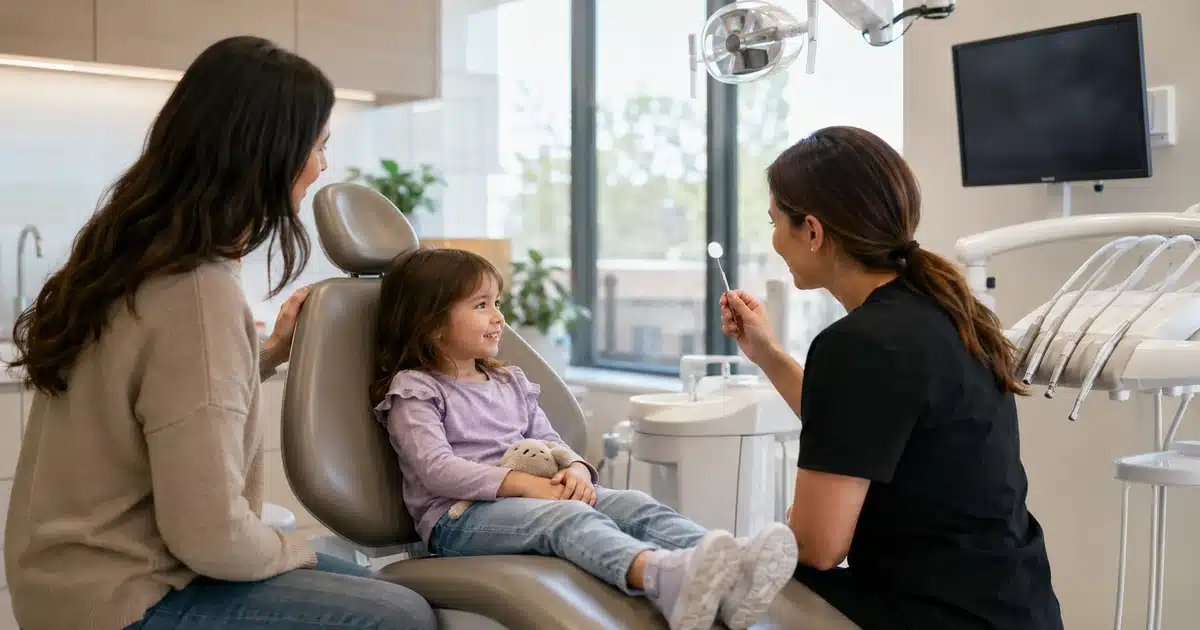
The Canadian Dental Association recommends that children see a dentist within six months of their first tooth erupting, or by their first birthday, whichever comes first. If your child has not yet had a first visit, or if a previous visit did not go smoothly, there are practical things you can do beforehand to help the appointment feel calmer for both of you.
Why the First Visit Matters, Even for Baby Teeth
Baby teeth are sometimes assumed not to matter much because they eventually fall out. However, baby teeth support chewing, speech development, and hold space for permanent teeth to come in properly. Early visits also give your dentist a chance to catch developing issues sooner and establish a relationship with your child before any treatment is needed.
Just as importantly, an early, low-pressure introduction to the dental office tends to make future visits easier. Children who become familiar with the environment before there is a problem to treat often adjust more comfortably to ongoing care.
Why Some Children Feel Anxious About the Dentist
A child’s anxiety about a dentist visit can come from several places: unfamiliar sounds and smells, the sensation of someone examining their mouth, separation from a parent during part of the exam, or picking up on a parent’s own nervousness about dental visits. Understanding the likely source of anxiety can help you choose the right approach to preparing your child.
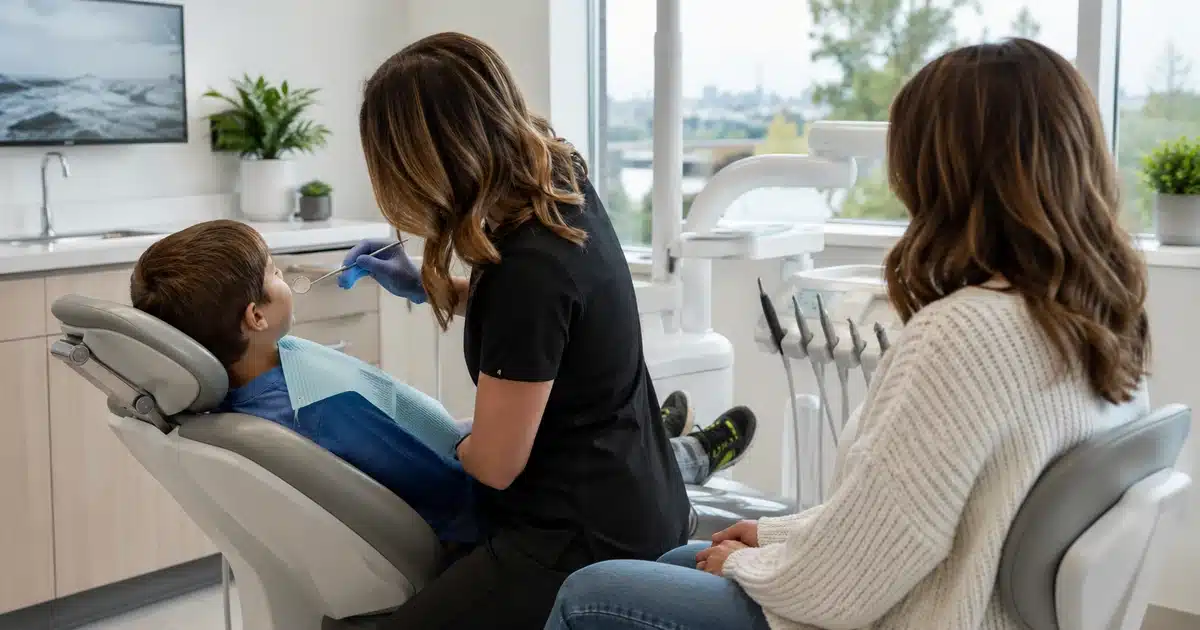
Before the Appointment
Watch your own language. Children often absorb the emotional tone behind words, not just the words themselves. Terms like “hurt,” “shot,” “painful,” or “don’t worry” can unintentionally introduce a worry that was not there before. Neutral language, such as describing a visit as “the dentist will count your teeth and take a picture,” tends to work better than reassurance framed around avoiding pain.
Read a children’s book about visiting the dentist. Several age-appropriate books walk through a dental visit in simple, calm terms. This gives your child a mental picture of what to expect before the day arrives.
Practise at home. Letting your child “check” a stuffed animal or parent’s teeth with a soft toothbrush can turn the exam into something familiar rather than unknown.
Avoid scheduling around naps or hunger. A tired or hungry toddler is more likely to be irritable regardless of the appointment itself. Where possible, book a time that fits your child’s usual routine.
Consider a “meet and greet” visit first. For a child with significant apprehension, some dental teams can arrange a short visit to see the office and meet staff without any examination taking place. Ask our team at Willowgreen Dental whether this is a good option for your child.
What Typically Happens at a First Visit
A first dental visit is usually brief and focused on comfort and observation rather than treatment. It generally includes:
• A gentle look at the teeth and gums, often with the child sitting on a parent’s lap for very young children
• A general assessment of oral development and any early signs of decay
• Guidance for parents on brushing technique, fluoride use, and diet
• An opportunity for your child to see and touch some of the tools in a non-threatening way
Most first visits do not involve any dental treatment. If a concern is identified, your dentist will explain it and discuss next steps rather than proceeding immediately, unless there is an urgent issue.
During the Appointment
Let the dental team lead the conversation with your child. Dental staff who work regularly with children often use specific language and pacing designed to keep young patients calm. Following their lead, rather than jumping in to reassure or explain, usually helps.
Stay calm and neutral, even if your child is upset. Children pick up on a parent’s tension quickly. A steady, unbothered tone from a parent often helps a child settle faster than repeated reassurance.
Avoid bribery framed around fear. Rewards for cooperation are fine, but framing them as “you’ll get a treat if you’re not scared” can inadvertently suggest there was something to be scared of in the first place.
If Your Child Has Already Had a Difficult Dental Experience
Some children arrive at their appointment already anxious because of a prior negative experience, a story from a sibling or friend, or general apprehension about unfamiliar medical settings. If this applies to your child, it is worth mentioning to our team before the appointment. In some cases, a dentist may recommend a gentler pacing across multiple short visits rather than completing everything in one sitting. For children with significant anxiety or difficulty cooperating, sedation dentistry options may be discussed, depending on the clinical situation and the dentist’s assessment.

Common Questions Saskatoon Parents Ask
My child is already 3 or 4 and has never seen a dentist. Is it too late to start?
No. While earlier visits are recommended, starting later than the ideal window does not prevent a child from having a positive experience going forward. Our team can discuss an appropriate approach based on your child’s age and temperament.
What if my child cries or refuses to open their mouth?
This is common and dental teams who regularly see young children are generally well practised at working through it patiently. If a full examination cannot be completed on a given day, the dentist may suggest trying again at a follow-up visit rather than forcing the process.
Should I stay in the room during the exam?
This varies by child and by clinic approach. Some children do better with a parent present; others settle more easily with the dental team’s undivided attention. Our team can advise on what tends to work best based on the visit.
Is it normal for a first visit to be very short?
Yes. A first visit, especially for a toddler, is often brief and focused on building familiarity rather than completing a lengthy examination.
Willowgreen Dental welcomes new young patients at our clinic at #104 – 1848 McOrmond Drive, serving families across Willowgrove, University Heights, Evergreen, Brighton, Erindale, and Rosewood. Our team has experience working with anxious and first-time young patients as part of our children’s dentistry care. To ask questions before booking or to schedule a first visit, contact us through our contact page.
This information is intended for general patient education and does not replace a dental examination, diagnosis, or individualized treatment recommendation. Every child’s comfort level and readiness for a dental visit varies, and your dentist can advise on the best approach for your child specifically.