

Most dental problems are easier to manage when they are found early. For families, preventive dental care is not just about brushing and flossing. It includes regular dental exams, professional cleanings, fluoride support, dental sealants, mouthguards, oral cancer screening, and knowing when a small concern should be checked before it becomes more serious.
A good prevention plan can help children build healthy habits, help adults maintain strong teeth and gums, and help seniors protect existing dental work. It also gives your dental team a chance to identify changes before they become painful, expensive, or urgent.
This guide explains the main parts of preventive dental care, how they apply to different age groups, and when to book an appointment with Willowgreen Dental.
Quick Answer
Preventive dental care means taking steps to reduce the risk of cavities, gum problems, enamel wear, oral injuries, and untreated dental concerns. It usually includes daily brushing and flossing, regular dental cleanings, exams, fluoride when appropriate, sealants for cavity-prone teeth, mouthguards for sports or grinding, and early dental visits when symptoms appear.
Why Preventive Dentistry Matters
Preventive dentistry focuses on keeping teeth, gums, and oral tissues healthy instead of waiting until there is pain or visible damage. Many dental issues begin quietly. A cavity may not hurt at first. Gum inflammation can start with mild bleeding. Grinding can wear teeth slowly. A cracked filling may not become obvious until food starts catching or sensitivity develops.
That is why regular care matters. Willowgreen Dental’s preventative dentistry services are designed to help patients stay ahead of common oral health problems through ongoing checkups, cleaning, screening, and personalized recommendations.
Preventive care can help with:
- Cavity prevention
- Gum health
- Plaque and tartar control
- Early detection of dental concerns
- Monitoring old fillings, crowns, and restorations
- Reducing the chance of dental emergencies
- Protecting children’s developing teeth
- Supporting long-term oral health
The Main Parts of a Preventive Dental Plan
A strong preventive routine usually combines home care with professional dental care.
| Preventive Step | What It Helps With | Who It Helps |
|---|---|---|
| Brushing and flossing | Plaque control and gum health | All patients |
| Dental cleanings | Tartar removal and stain reduction | All patients |
| Dental exams | Early detection of concerns | All patients |
| Fluoride | Enamel support and cavity prevention | All patients |
| Sealants | Cavity protection on back teeth | Children, teens, and some adults |
| Mouthguards | Protection from sports injuries or grinding | Active patients and grinders |
| Oral cancer screening | Checking tissue changes | All patients |
| Early symptom visits | Preventing small issues from worsening | Any patient with discomfort or changes |
The best plan depends on age, health history, cavity risk, gum condition, diet, habits, and existing dental work.
Dental Cleanings: More Than a Polish
Daily brushing and flossing are important, but they cannot remove hardened tartar once it forms. A professional cleaning helps remove buildup from areas that are difficult to clean at home, especially near the gumline and between teeth.
A dental cleaning may help reduce plaque buildup, support gum health, freshen the mouth, and give the dental team a chance to spot areas that need more attention.
Willowgreen Dental provides dental cleaning appointments for patients who want to maintain a consistent oral health routine.
Signs you may be overdue for a cleaning include:
- Bleeding gums when brushing or flossing
- Persistent bad breath
- Visible tartar buildup
- Staining near the gumline
- Tender or swollen gums
- Food caught between teeth
- A long gap since your last dental visit
Children Need Prevention Early
Children benefit from preventive dental care because their habits, enamel, bite, and oral development are still changing. Early dental visits can help children become comfortable in the dental office while giving parents guidance on brushing, flossing, snacks, fluoride, thumb habits, and cavity prevention.
Willowgreen Dental’s children’s dentistry services support younger patients with age-appropriate dental care.
Parents should pay attention to:
- Brushing technique
- Whether children are missing the back teeth
- Sticky or frequent snacks
- Juice and sugary drinks
- White or brown spots on teeth
- Tooth sensitivity
- Baby teeth that seem damaged or painful
- Adult teeth coming in crooked or crowded
Children do not always explain dental discomfort clearly. They may avoid chewing on one side, refuse certain foods, complain briefly, or seem bothered when brushing. These signs are worth checking.

Fluoride: When It May Be Recommended
Fluoride can help support enamel and reduce cavity risk when used appropriately.
A dentist may discuss fluoride if a patient has:
- A history of frequent cavities
- Early enamel weakening
- Dry mouth
- Braces or orthodontic appliances
- Exposed root surfaces
- Difficulty cleaning certain areas
- Higher sugar or acid exposure
- Sensitivity concerns
Willowgreen Dental offers fluoride treatment as part of preventive care when it fits a patient’s needs.
Dental Sealants: Helpful Protection for Back Teeth
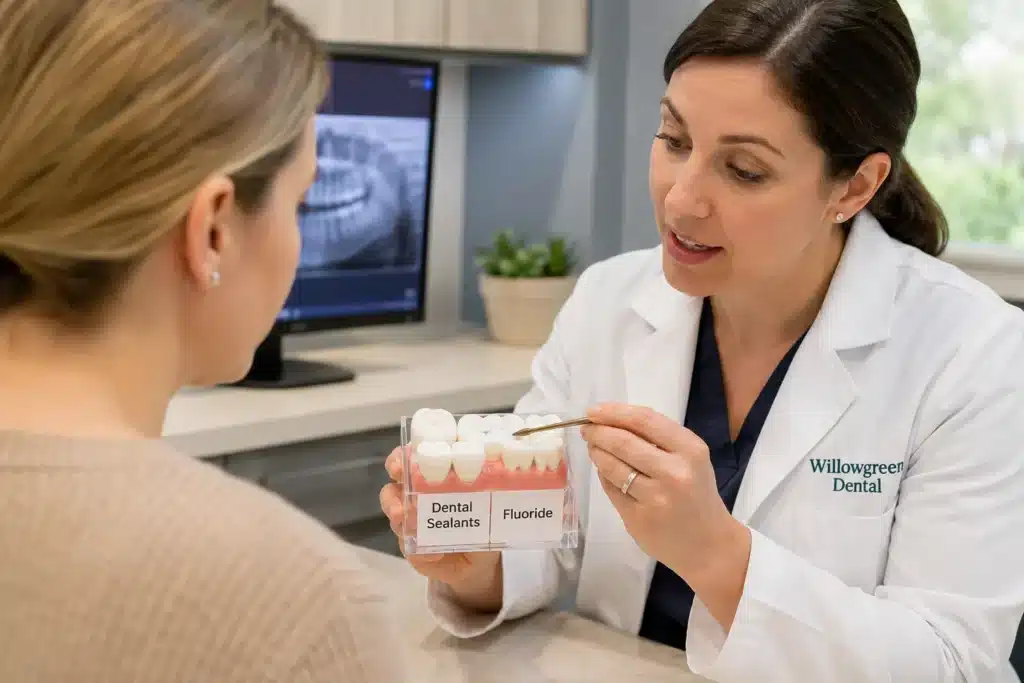
Back teeth have grooves and pits that can trap food and plaque. Even with good brushing, these areas can be difficult for children and teens to keep clean. Dental sealants create a protective coating over those chewing surfaces to help reduce the chance of cavities in vulnerable grooves.
Sealants are commonly considered for permanent molars after they come in, but some adults may also benefit, depending on tooth shape and cavity risk.
Willowgreen Dental provides dental sealants for patients who may benefit from added protection on chewing surfaces.
| Fluoride | Sealants |
|---|---|
| Supports enamel strength | Covers grooves on back teeth |
| Often applied to multiple teeth | Usually used on molars and premolars |
| Helpful for cavity-prone patients | Helpful for deep pits and grooves |
| Often part of routine prevention | Often recommended after molars erupt |
Mouthguards: Prevention for Sports and Grinding
Preventive care is not only about cavities. It also includes protecting teeth from injury and wear.
A mouthguard may be recommended for patients who play contact sports, participate in activities with fall risk, or grind and clench their teeth. Sports injuries can chip, crack, loosen, or knock teeth. Grinding can wear enamel, strain jaw muscles, and damage dental work over time.
Willowgreen Dental’s mouthguards page is a helpful resource for patients who need protection for sports or nighttime grinding.
A custom mouthguard may be worth discussing if you notice:
- Morning jaw soreness
- Worn or flattened tooth edges
- Headaches linked to clenching
- Chipped teeth
- Cracked fillings
- Sports participation
- A history of dental injuries

Oral Cancer Screening Should Not Be Ignored
Preventive dental visits also give the dental team a chance to look at the soft tissues of the mouth, tongue, gums, cheeks, throat area, and lips. Oral cancer screening is not only for people with obvious symptoms. It can be part of a broader preventive visit.
Willowgreen Dental provides oral cancer screening as part of monitoring oral tissue health.
Book a dental visit if you notice:
- A sore that does not heal
- A lump or thickened area
- Red or white patches
- Unexplained bleeding
- Persistent hoarseness
- Difficulty swallowing
- Numbness or ongoing tenderness
- A change in how dentures or oral appliances fit
These symptoms do not always mean something serious, but they should be checked.
Preventive Dental Care by Age
Different life stages require different priorities.
| Age Group | Preventive Focus |
|---|---|
| Young children | Brushing help, early visits, cavity prevention, fluoride guidance |
| School-age children | Sealants, brushing habits, snack habits, sports protection |
| Teens | Orthodontic cleaning, mouthguards, wisdom tooth monitoring, and gum care |
| Adults | Cleanings, gum health, restoration monitoring, grinding protection |
| Seniors | Dry mouth, gum health, denture fit, crowns, bridges, implants, tissue screening |
The goal is not to use the same plan for everyone. The goal is to match care to the patient’s age, risk level, and oral health needs.
When Prevention Becomes Urgent
Preventive care works best before pain starts. However, some symptoms should be checked quickly because they may indicate a dental problem that needs attention.
Contact a dentist if you have:
- Tooth pain that does not go away
- Swelling near a tooth or gum
- A cracked or broken tooth
- A loose adult tooth
- A knocked-out tooth
- Pain when biting
- Sensitivity that suddenly worsens
- Bleeding that is heavy or unexplained
- A lost filling or crown
For urgent concerns, Willowgreen Dental’s emergency dentistry page can help patients understand when to seek prompt dental care.
Home Care Still Matters Every Day
Professional care is important, but daily habits are the foundation of prevention.
A strong home routine usually includes:
- Brushing twice daily with proper technique
- Cleaning between teeth daily
- Drinking water regularly
- Limiting frequent sugary or acidic snacks
- Replacing toothbrushes regularly
- Wearing a mouthguard when recommended
- Not ignoring sensitivity, bleeding, or pain
- Keeping regular dental appointments
Small habits repeated consistently can make a major difference over time.
Prevention Checklist for Families
Use this simple checklist to stay organized:
| Task | How Often to Review |
|---|---|
| Replace toothbrushes | Every few months or after an illness |
| Check children’s brushing | Daily for younger children |
| Floss or clean between teeth | Daily |
| Review snack and drink habits | Weekly |
| Check sports mouthguard fit | Before each season |
| Book dental cleanings | Based on dentist recommendation |
| Ask about fluoride or sealants | During routine visits |
| Mention sensitivity or bleeding | As soon as noticed |
Final Takeaway
Preventive dental care helps families stay ahead of cavities, gum problems, enamel wear, oral injuries, and untreated symptoms. It includes more than brushing. Cleanings, exams, fluoride, sealants, mouthguards, oral cancer screening, and early attention to symptoms all play a role.
The best preventive plan is personal. Children, teens, adults, and seniors all have different needs. Regular visits give your dental team the chance to recommend care based on what is happening in your mouth now, not just a general schedule.
To plan your next preventive visit, reach out to Willowgreen Dental through the contact page.