
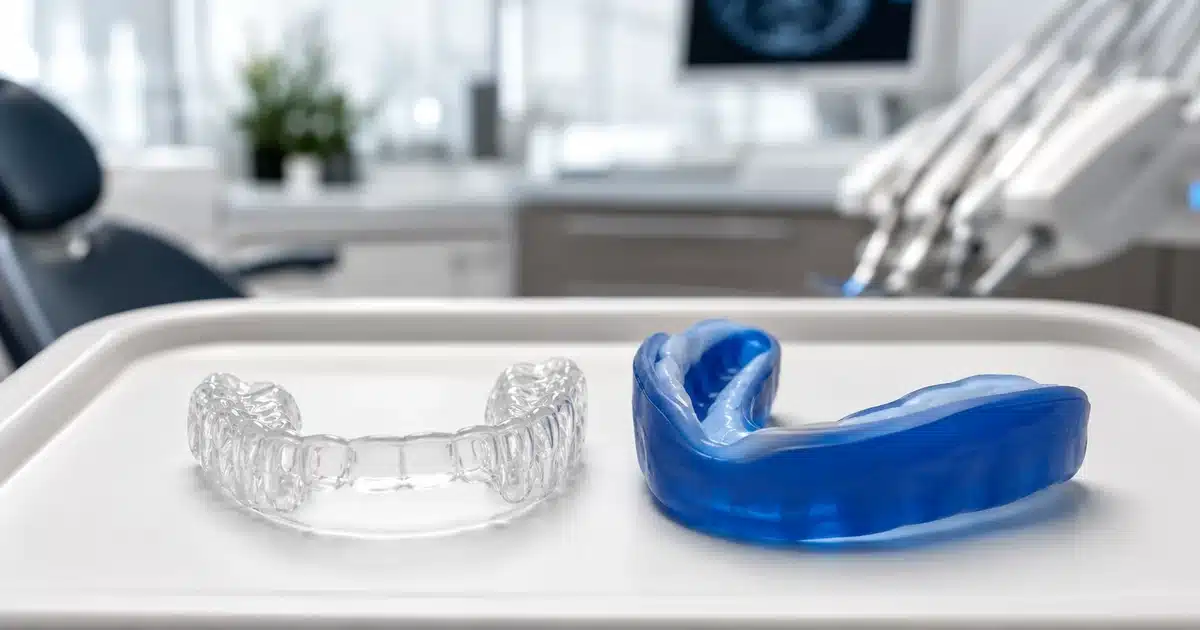
A night guard and a sports guard are both types of oral appliances, but they are built for different purposes and are not interchangeable. A night guard is designed to protect teeth from the effects of clenching or grinding during sleep. A sports guard, sometimes called an athletic mouthguard, is designed to absorb and distribute impact during contact or higher-risk physical activity. Using one in place of the other is generally not recommended, since each is designed for a different type of force.
With fall sports registration underway across Saskatoon, this is a good time to check which type your family actually needs.
What Is a Night Guard Used For?
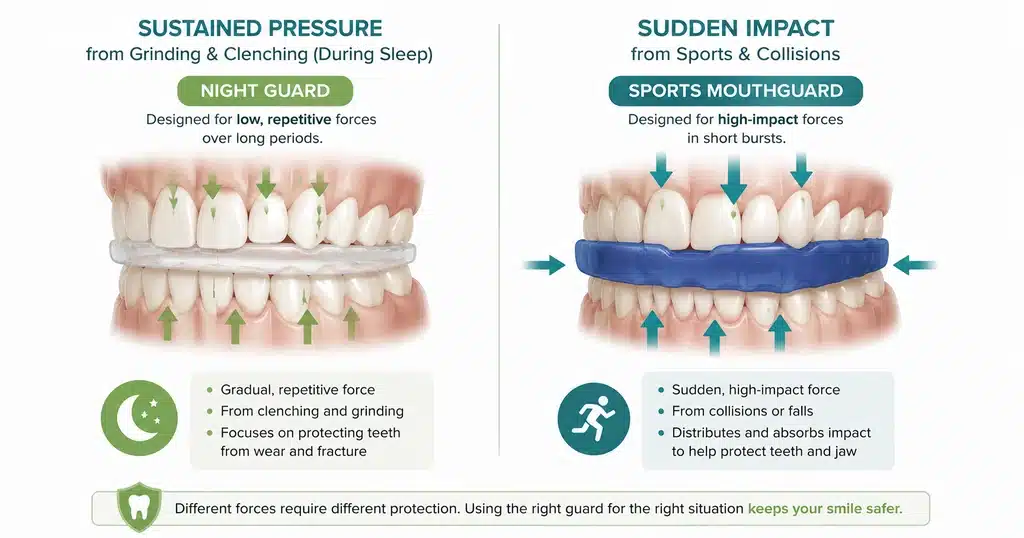
A night guard is typically recommended for patients who clench or grind their teeth during sleep, a condition often referred to as bruxism. Over time, grinding can wear down tooth enamel, contribute to jaw discomfort, and in some cases affect existing dental work such as dental crowns or fillings.
A night guard is usually custom-fitted from a dental impression or digital scan of your teeth, then worn while sleeping. It creates a barrier between the upper and lower teeth so they are not grinding directly against one another.
What Is a Sports Guard Used For?
A sports guard, sometimes called an athletic mouthguard, is worn during sports or recreational activity where there is a risk of a blow to the face or mouth. It is designed to help absorb impact and reduce the risk of injury to teeth, lips, and surrounding soft tissue. Sports guards are commonly recommended for contact sports such as hockey, football, and rugby, as well as some non-contact activities where falls or equipment contact are a risk.
Why the Two Are Not Interchangeable
The forces involved are different in nature. Clenching and grinding during sleep apply sustained, repetitive pressure over hours. An impact during sports is a sudden, high-force event over a fraction of a second. A guard built to cushion one kind of force is not necessarily built to protect against the other. A thin night guard, for example, may not provide adequate protection against a sudden blow, and a bulkier sports guard is not typically designed for extended overnight wear.
Comparing the Main Types Available
| Feature | Custom-Fitted Guard | Boil-and-Bite Guard | Stock (Pre-Formed) Guard |
|---|---|---|---|
| How it is made | Made from a dental impression or scan of your teeth | Softened in hot water, then bitten into to shape at home | Pre-made in a limited range of sizes |
| Typical fit | Closely follows the shape of your teeth | Fit varies depending on how well it is shaped at home | Least precise fit of the three |
| Where it is obtained | Dental clinic | Pharmacy or sporting goods store | Pharmacy or sporting goods store |
| Comfort with extended wear | Generally more comfortable for full-night or full-game wear | Can feel bulkier | Often the bulkiest option |
| Suitability for braces | Can often be adapted for orthodontic appliances, depending on the case | May not accommodate braces well | Not typically designed for braces |
The Canadian Dental Association and the American Dental Association both note that a properly fitted mouthguard plays an important role in reducing the likelihood and severity of dental injury during sports. Whether a custom, boil-and-bite, or stock guard is the right choice for your family depends on the sport, the level of play, and your dentist’s assessment of fit and comfort.
Signs a Mouthguard Does Not Fit Properly
A poorly fitting guard, of any type, is less likely to be worn consistently and less likely to protect effectively. Watch for these signs:
• The guard shifts or needs to be repositioned frequently during activity
• Your child has to bite down constantly to keep it in place
• It interferes noticeably with breathing or speech
• It causes gagging or persistent discomfort
If any of these apply, it is worth discussing an alternative with your dentist rather than assuming the child will simply get used to it.
Do Children With Braces Need a Different Guard?
Children and teens with braces face a higher risk of soft tissue injury from a direct blow, since brackets and wires can cut the inside of the lips and cheeks on impact. A properly fitted sports guard is often recommended during this stage of orthodontic treatment. Ask your orthodontic provider or dentist which type is appropriate, since fit needs to account for the orthodontic appliance itself. Our orthodontics team can advise on this during an active treatment plan.
How Long Do Mouthguards Last?
Lifespan varies by type, wear pattern, and growth. A custom guard for a growing child or teen will likely need to be replaced periodically to accommodate changes in the mouth, separate from ordinary wear and tear. Guards should be inspected periodically for tears, thinning, or a loosened fit, and replaced when any of these are present.

Common Questions Saskatoon Families Ask
Can one mouthguard work for both grinding and sports?
Generally, no. Because grinding and sports impacts place different types of force on a guard, a single appliance designed for one purpose is not typically recommended as a substitute for the other. If your child both grinds their teeth and plays contact sports, your dentist can discuss whether two separate guards are appropriate.
Is a custom guard worth it if my child is still growing?
This depends on your child’s sport, level of play, and how their mouth is developing. A dentist can help weigh the benefits of a more precise fit against the likelihood that a growing child’s mouth will change over time.
Where can I get a custom-fitted guard in Saskatoon?
Willowgreen Dental provides custom mouthguards fitted from a dental impression or digital scan taken at our clinic.
Does insurance cover mouthguards?
Coverage depends on your specific plan and whether the guard is classified as medically necessary (for example, related to bruxism) versus elective sports equipment. Check directly with your provider, or ask our team to help clarify what your plan may cover.
If your child is registering for fall hockey, football, or another contact sport, now is a practical time to book a fitting before practices begin. Willowgreen Dental is located at #104 – 1848 McOrmond Drive in Saskatoon, serving Willowgrove, University Heights, Evergreen, Brighton, Erindale, and Rosewood. Contact our team through our contact page to book a mouthguard fitting or ask which type is right for your family.
This information is intended for general patient education and does not replace a dental examination, diagnosis, or individualized treatment recommendation. Whether a custom, boil-and-bite, or stock mouthguard is appropriate depends on clinical assessment, the sport involved, and your dentist’s professional judgment.