

Many people hope that a cavity will go away on its own. The short answer to “can dental cavities heal themselves?” is no, because tooth enamel cannot regrow once a hole has formed. However, there is some very good news about the earliest stage of tooth decay. Keep reading to learn how you can help reverse the earliest signs of damage.
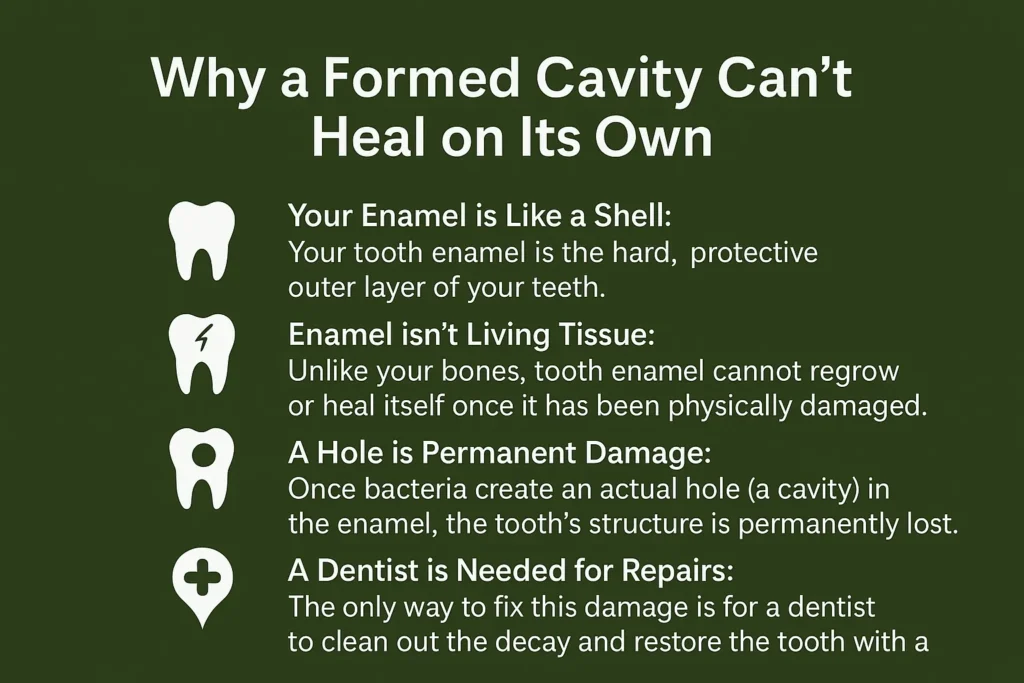
Why a Formed Cavity Can’t Heal on Its Own
To understand why a real cavity needs a dentist, it helps to know a few simple facts about your teeth.
How to Help Your Enamel Remineralize
You can take a few effective steps at home and with your dentist to help rebuild and strengthen weakened enamel.
- Use Fluoride Daily: Fluoride is a natural mineral that makes your enamel stronger. Using a fluoride toothpaste every day is the best first step. For an extra boost, a professional fluoride treatment may help strengthen early weak spots.
- Limit Sugary Foods and Drinks: Cavity-causing bacteria feed on sugar. By cutting back on sugar, you give these bacteria less fuel to create the acids that weaken your enamel.
- Brush and Floss Consistently: Daily brushing and flossing physically remove the sticky plaque and bacteria from your teeth before they can cause damage.
- Consider Dental Sealants: For extra protection, especially on the chewing surfaces of molars, dental sealants act as a barrier to keep plaque and food out.
How to Stop a Cavity from Getting Worse
Once a weakened spot on your enamel becomes a small, physical cavity, the approach needs to change. Here is what you need to know about stopping it from spreading.

This principle of early action applies to all types of dental restorations. Understanding the lifespan of different treatments, such as knowing how long dental bonds last, highlights why simpler, earlier fixes are always the best approach.
What Happens When a Cavity Has Formed? Professional Treatments
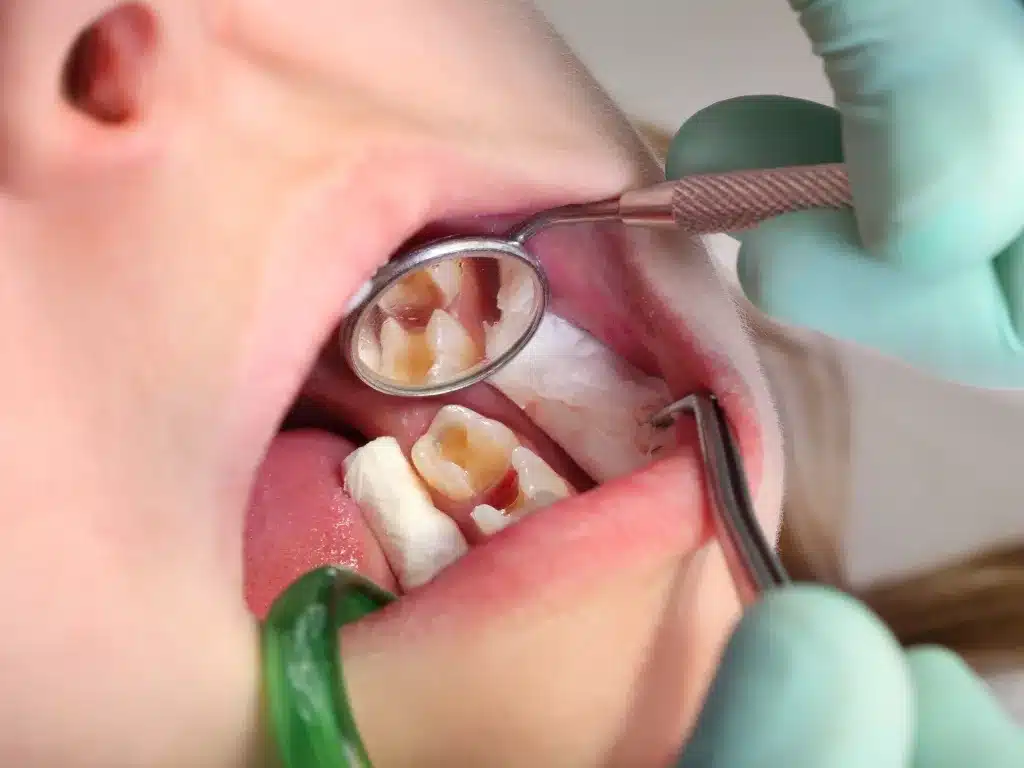
Once a cavity has made a hole, a dentist must fix it. The type of treatment depends on how big the cavity has become. Here are the most common options.
- Dental Fillings: This is the most common fix for a cavity. The dental filling procedure is a commonly used way to repair a tooth. To make sure you’re comfortable, we use freezing, and it helps to know how long does dental freezing last.
- Dental Crowns: If a cavity is very large, the tooth might be too weak for a simple filling. In this case, a dental crown, which is like a strong new cover, is placed over the whole tooth to protect it.
- Root Canals: If the decay is left for too long, it can reach the soft nerve inside the tooth. When this happens, a root canal treatment is needed to save the tooth from being lost.
Conclusion
So, can dental cavities heal themselves? The final answer is no, but you have the power to stop decay in its earliest stage. Prevention and quick action are the best ways to keep your teeth healthy.Regular dental check-ups are the best way for us to spot any weak spots before they become cavities. If you have any concerns about your teeth, please contact us to schedule a visit.