

Paying for dental work can be expensive most of the time. The good news is that some of those costs might help you lower your taxes. But can you claim dental bills on taxes? Well, yes, if you really need the treatment and meet the rules, then you can claim it. This guide will show you when you can claim dental bills, how much you can claim, and how to do it step by step. All the information here follows the official rules from the Canada Revenue Agency (CRA).
When Are Dental Bills Tax-Deductible?
Can you claim dental bills on your taxes? You can claim the bills as medical expenses if you meet these rules:
- The treatment was done by a licensed dentist.
- If you really needed the services and not just for cosmetic reasons.
- When you paid for the service yourself, not your insurance company.
- The bill was paid in any 12 months ending in the tax year you’re filing.
If you’re doing your 2024 taxes in 2026, you can include bills paid between January 2, 2024, and January 1, 2026. The important thing is when you paid the bill, not when the dental work was done. You can claim expenses for these people:
- Yourself
- Your spouse or common-law partner
- Your children or dependents (if they lived with you and relied on you for support)

How Much Can You Claim for Dental Expenses?
The CRA has a rule that says you can only claim the part of your medical expenses that goes over a specific amount. This amount is called the threshold. For the 2024 tax year, you can only claim expenses that go over 3% of your net income or $2,635, whichever is less.
Example: If your net income is $35,000, then 3% is $1,050. If you paid $1,500 for dental bills, you can only claim $450 on your tax return.
If your spouse or partner has a lower income, it may be better for them to claim the bills. In this way, you will reach the threshold faster and get more back in tax credits.
What Do You Need Before You File?
Can you claim dental bills on your income tax? Or what else will you need? Here’s your answer:
- Try to keep the receipts from your dentist
- Make sure you know the name and address of the clinic
- Note down the license number of the dentist
- Proof of payment (credit card slip, bank statement, or invoice)
- Name of the person who got the treatment
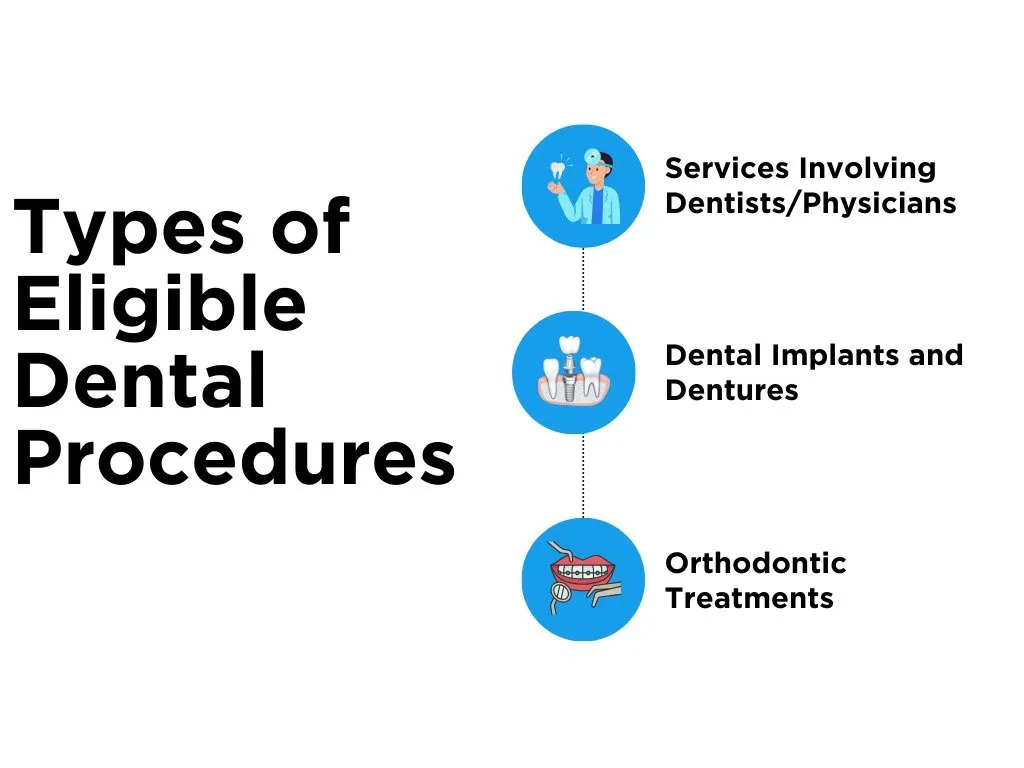
What Types of Dental Procedures Are Eligible?
Your reason should be valid. You can claim it only if it was medically needed. And make sure the dentist is licensed. Here’s when you can claim:
- Checkups and exams
- Fillings and root canals
- Crowns, bridges, and dentures
- Braces, if needed for health
- Dental surgery and tooth extractions
- Implants if medically needed
And here is when you cannot claim:
- Teeth whitening
- Cosmetic dental work
- Mouthwash, toothpaste, or floss
- Missed appointment fees
- Services paid by insurance
How to Claim Dental Bills on Your Tax Return?
To claim dental bills, you have to use the Medical Expense Tax Credit on your return. Here are the steps:
- Add up all your allowed medical and dental bills.
- Use Line 33099 for yourself, your partner, or children under 18.
- Use Line 33199 for other dependents (like a parent or grandparent).
- Take the minimum threshold (3% of income or $2,635).
- Claim the rest on your tax return.
Tips to Maximize Your Tax Return Using Dental Bills
Here are some simple ways to get the most from your claim:
- Group all medical bills from one 12-month period to increase the total
- You should claim under the person with the lower net income
- Try to add travel costs if you had to drive over 40 km for dental care
- You have to keep every receipt and label them by date
- You can also use CRA-approved software to avoid mistakes
Conclusion
To avoid a huge expense, you have to claim your dental bills on taxes. If you are still confused and asking, “Can you claim dental bills on taxes?” Then you should check the CRA’s official website for the most up-to-date rules. Start saving your dental receipts now so you’re ready for next year’s return.