

Some root canal treatments can be completed in a single appointment, while others require two or occasionally more stages. Needing another visit does not automatically mean something went wrong.
The number of appointments can depend on the tooth’s anatomy, the condition inside and around the tooth, whether the canals can be adequately cleaned and managed at that visit, and the restorative plan for the tooth.
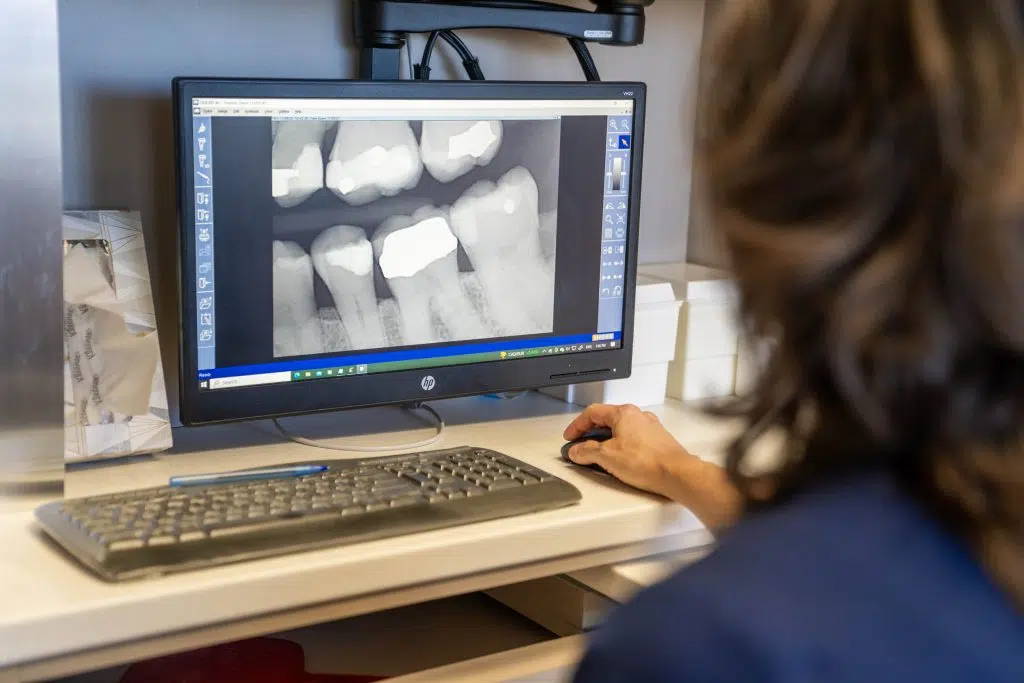
Your dentist determines the appropriate approach after examining the tooth and, when appropriate, reviewing dental imaging.
A root canal may take more than one appointment when the canals are complex or the clinical situation calls for staged cleaning, disinfection, or reassessment. A separate appointment may also be needed for a crown or other final restoration.
How Many Appointments Does a Root Canal Usually Take?
There is no fixed number for every patient. Treatment may be completed in one appointment, two appointments, or occasionally additional visits in more complex circumstances.
It is also important to distinguish the root canal procedure itself from later restorative care. Even if the root canal is completed in one appointment, another visit may be needed for a permanent filling, crown, or other restoration.
Why Can One Root Canal Be Completed in One Visit While Another Cannot?
Teeth are not identical. A front tooth and a molar, for example, can have very different internal anatomy. Several factors can influence treatment planning.
1. The Number and Shape of the Root Canals
Inside a tooth is a system of narrow spaces known as root canals. Some teeth have relatively straightforward anatomy. Others can have multiple, narrow, curved, or branching canals.
Treatment requires the dentist to locate, clean, shape, disinfect, and seal the relevant canal spaces. More complicated internal anatomy may require more time than a straightforward case.
2. The Condition of the Pulp
The pulp is the soft tissue inside the tooth containing nerves and blood vessels. Treatment may be considered when the pulp has become irreversibly inflamed, infected, or damaged.
A tooth with a straightforward clinical situation may be managed differently from one associated with significant infection, drainage, swelling, previous root canal treatment, complicated anatomy, or other concerns that require additional management.
3. The Canals May Need Additional Cleaning or Disinfection
An important goal is to thoroughly clean and disinfect the internal canal system before it is sealed. In some situations, the dentist may decide that another appointment is appropriate before completing the final seal.
If treatment is staged, medication may sometimes be placed inside the tooth and a temporary restoration used between visits. The exact technique varies according to the tooth and clinician’s assessment.
4. The Dentist May Need to Monitor the Tooth Between Stages
Depending on the clinical situation, treatment may be divided into stages so the tooth can be reassessed before completion. This does not mean every infected tooth requires several visits.
Visit number should be determined by what is appropriate for the tooth, not by the assumption that faster is always better or that more appointments automatically mean more thorough care.
Is a Two-Visit Root Canal Better Than a One-Visit Root Canal?
Not universally. Both single-visit and multiple-visit root canal treatment are established approaches. The appropriate choice depends on the individual clinical situation.
- Single-visit treatment is not automatically better.
- A proper root canal does not always have to take two visits.
- More visits do not automatically mean a worse infection.
- One-visit treatment is not automatically more advanced.

What Happens at the First Root Canal Appointment?
The exact sequence varies, but treatment generally involves accessing the inside of the tooth and treating the diseased or damaged pulp and canal system.
- Assessment and imaging when appropriate
- Local anaesthetic
- Isolation of the tooth
- Creating access to the pulp chamber
- Removing damaged or infected pulp tissue
- Cleaning and shaping the canal system
- Disinfecting the canals
- Sealing the canals if treatment is being completed
- Placing a temporary restoration if another stage is required
What Happens Between Root Canal Appointments?
If treatment is not completed at the first visit, the tooth is typically protected with a temporary restoration. Do not treat a temporary filling as if the treatment is permanently finished.
- Follow the dentist’s aftercare instructions
- Keep the area clean
- Be cautious with heavy chewing on the treated tooth
- Avoid disturbing the temporary restoration
- Return for the scheduled follow-up
Why Is a Temporary Filling Used?
A temporary filling helps protect the access opening in the tooth between appointments. Because temporary materials are not necessarily designed to function as long-term restorations, patients may be advised to avoid heavy or sticky chewing on the tooth.
If the temporary filling comes out, contact the dental clinic rather than waiting until the next planned appointment without telling them.
What If the Tooth Feels Better After the First Visit?
Improvement in pain does not necessarily mean the treatment no longer needs to be completed. A partially completed treatment still requires the next steps recommended by the dentist.
Does a Root Canal Always Need a Crown?
Not every treated tooth automatically requires exactly the same restoration. The decision depends on which tooth was treated, how much tooth structure remains, existing restorations, cracks or fractures, chewing forces, and other individual considerations.
Back teeth often experience substantial chewing forces, and crowns may be recommended in many cases to protect weakened tooth structure.
Does Needing More Than One Appointment Mean the Root Canal Is Failing?
No. A planned second appointment can simply be part of the treatment strategy. However, contact your dental office if you develop significant swelling, severe or increasing pain, loss of a temporary restoration, a bite that feels substantially different, or worsening symptoms.
What If You Cannot Attend the Second Appointment?
Contact the dental clinic as soon as possible. Do not simply leave the tooth with a temporary restoration indefinitely. Your dentist can explain how soon treatment should be completed and whether the appointment can safely be rescheduled.
Can Root Canal Treatment and a Crown Be Done on the Same Day?
Sometimes treatment workflows allow several stages to happen quickly, but this varies considerably among patients and practices. The important questions are whether the root canal has been appropriately completed, whether the tooth is ready for final restoration, what type of restoration is needed, and whether additional monitoring is required.
What Questions Should You Ask Before Treatment?
Clear expectations can make treatment feel much less uncertain.
- Why does this tooth need root canal treatment?
- Do you expect one appointment or more?
- What could change that estimate?
- Will I have a temporary filling?
- What should I avoid between appointments?
- Will this tooth need a crown or another restoration afterward?
- What symptoms should make me call before my next visit?
- When should final restoration be completed?
Root Canal Treatment in Saskatoon: What Should Patients Expect?
For Saskatoon patients, the number of visits should be based on the condition of the tooth rather than a standard promise that every procedure will be completed in a particular timeframe.
An assessment helps determine whether treatment is appropriate, the complexity of the tooth, whether imaging is useful, the likely sequence, and what restoration may be required afterward.
Willowgreen Dental’s root canal treatment page explains the service for patients who have been told they may need endodontic care.
Willowgreen Dental also provides information about dental crowns and when they may be considered.
One Visit or Two? The Goal Is the Same
The goal of root canal treatment is not to finish in the fewest appointments possible. The goal is to appropriately treat the inside of the tooth, seal it, and restore the tooth so it can continue functioning.
If you have persistent tooth pain, have been told you need endodontic treatment, or want to understand the treatment sequence for your tooth, Willowgreen Dental can assess your situation and explain whether root canal treatment may be appropriate.
Contact Willowgreen Dental to discuss an appointment in Saskatoon.
Frequently Asked Questions
Can a root canal be completed in one appointment?
Yes, some treatments can be completed in one appointment. Others are appropriately divided into multiple visits depending on the tooth and clinical circumstances.
Why did my dentist put a temporary filling in my tooth?
A temporary restoration can help protect the tooth between treatment stages. Attend the recommended follow-up so the planned treatment can be completed.
Does a second root canal appointment mean there is still an infection?
Not necessarily. There are several reasons treatment may be staged. Ask your dentist why another visit is recommended in your specific case.
How long can I leave a temporary filling after a root canal?
Follow the timeline your dentist gives you. Temporary restorations are not intended to replace completion of the planned treatment.
Will the second appointment hurt?
Local anaesthetic and other comfort measures can be used when appropriate. What you experience depends on the treatment being completed and your individual situation.
Do I need another appointment after the root canal is finished?
Often, yes. The tooth may require a final restoration such as a filling or crown. Your dentist can explain the restorative plan.
Understand each step of your treatment
Ask why a particular sequence is recommended, what happens between appointments, and how the tooth will be restored.
Contact Willowgreen Dental